De-addiction Psychiatrist in Mohali: Confidential Treatment for Alcohol and Substance Use
Addiction is a medical condition, not a failure of willpower. Yet it is surrounded by shame, which is why so many families struggle in silence for years before asking for help. If someone you love, or you yourself, is struggling with alcohol or drugs, a de-addiction psychiatrist in Mohali can offer confidential, non-judgmental treatment.
This guide explains how common the problem is, why professional help matters, and what treatment involves.
How big is the problem of addiction in India?
The National Survey on Extent and Pattern of Substance Use in India, carried out by AIIMS New Delhi’s National Drug Dependence Treatment Centre and released in 2019, found that 14.6% of people aged 10 to 75 consume alcohol, about 16 crore people. Use was far higher in men (27.3%) than women (1.6%). The survey estimated that about 2.8% of the population used cannabis products in the preceding year, and about 2.1% used opioids.
The most worrying finding is how few people get treatment. According to the same report, only 1 in 38 people with alcohol dependence had received any help. The National Mental Health Survey (2015–16) similarly found alcohol use disorders in 4.6% of adults, with a treatment gap of 86%. In other words, effective treatment exists, but most people who need it never reach it.
Signs that drinking or drug use has become a problem
Addiction develops gradually. Watch for these signs:
- Needing more of a substance to get the same effect
- Being unable to cut down, even after trying
- Spending a lot of time obtaining, using or recovering from the substance
- Neglecting work, family or responsibilities
- Continuing despite health, money or relationship problems
- Withdrawal symptoms such as shakiness, sweating, nausea, anxiety or trouble sleeping when you stop
- Hiding use or lying about it
Why see a de-addiction psychiatrist in Mohali?
Withdrawal can be dangerous. Stopping alcohol suddenly after heavy, long-term use can cause serious complications, including seizures and confusion. This is why detox should be supervised by a doctor. Please do not stop abruptly on your own if you drink heavily.
Addiction and mental health are linked. Many people drink or use drugs to cope with depression, anxiety, trauma or sleep problems, and substance use can in turn worsen these conditions. A psychiatrist can treat both together. See our article on depression and anxiety treatment in Mohali for more on this link.
Relapse is a risk, not a failure. Recovery often involves setbacks. A psychiatrist helps you plan for them and adjust treatment so they do not undo your progress.
What a de-addiction psychiatrist in Mohali does?
Treatment is individual, but it generally includes:
- Assessment. Your psychiatrist reviews your history, pattern of use, health and any co-existing mental health conditions.
- Safe withdrawal management. Where needed, medical supervision makes stopping safer and more comfortable.
- Medication support. Some medicines can reduce cravings or help prevent relapse, depending on the substance and your health.
- Counselling and therapy. Behavioural approaches help you understand triggers, build coping skills and rebuild motivation.
- Family involvement. With your consent, family members learn how to support recovery without blame.
- Long-term follow-up. Regular reviews help you stay on track and respond early if cravings return.
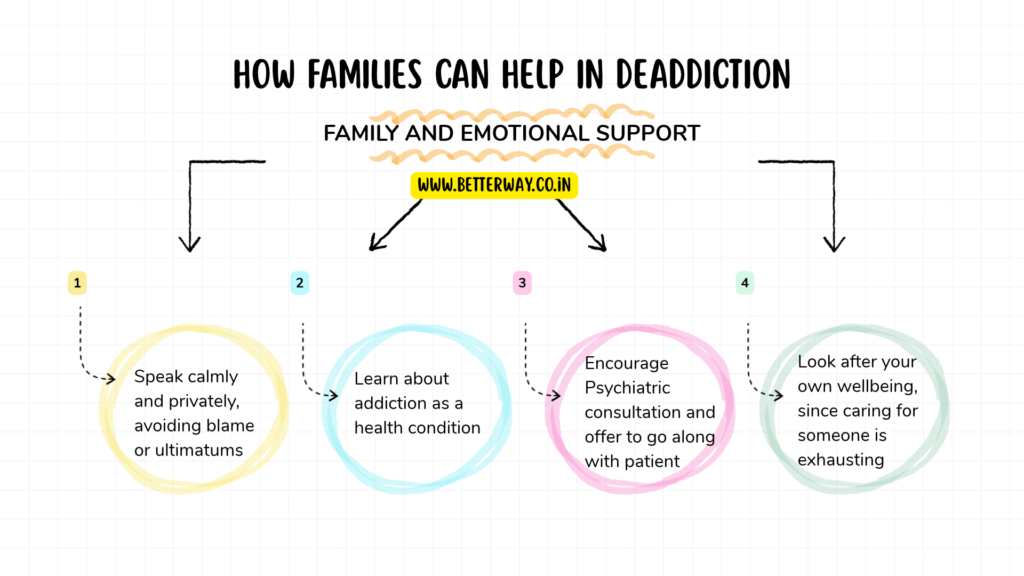
How families can help
- Speak calmly and privately, avoiding blame or ultimatums
- Learn about addiction as a health condition
- Encourage a medical consultation and offer to go along
- Look after your own wellbeing, since caring for someone with addiction is exhausting
- Don’t give up after a setback
Confidentiality
Everything you discuss with a de-addiction psychiatrist in Mohali is confidential. Therefore, seeing a doctor is not a legal matter, and seeking help is the first step toward recovery.
Related reading
- Choosing a doctor close to home: local psychiatrist in Mohali
- Understanding the bigger picture: mental health awareness guide
- Why stress feeds substance use: chronic stress warning signs
Frequently asked questions
Is addiction a medical condition?
Yes. Addiction is a health condition, not a lack of willpower. As a result, it responds to treatment, and getting help early improves the chances of recovery.
Is it safe to stop drinking suddenly at home?
If you drink heavily and regularly, stopping suddenly can cause serious complications, including seizures and confusion. Therefore, withdrawal should be supervised by a doctor, so please speak to a psychiatrist first.
Will my treatment be confidential?
Yes. Everything you discuss with your psychiatrist is confidential, and seeking medical help is not a legal matter.
Does a relapse mean treatment has failed?
No. Setbacks are a common part of recovery. Your psychiatrist helps you plan for them and adjusts treatment so they do not undo your progress.
Can medicines help with cravings?
For some substances and some people, yes. Certain medicines can reduce cravings or help prevent relapse. Your psychiatrist decides after assessing your history, health and pattern of use.
How can my family support me or a loved one?
Stay calm and avoid blame, learn about addiction as a health condition, encourage a medical consultation and offer to go along, and look after your own wellbeing. So, With your consent, family members can also take part in sessions.
Prioritize Your Mental Well-Being Today
Ignoring chronic emotional distress only prolongs suffering and complicates eventual treatment. Taking the initiative to consult a De-addiction Psychiatrist in Mohali is a powerful step toward reclaiming your cognitive and emotional health. You deserve access to a medical professional like Dr Parag Sharma MD (Psychiatry) who applies the latest scientific advancements to your care.
Take the first step toward lasting mental wellness. Book a secure, highly confidential online video consultation across India today and consult with a Psychiatrist.
Book Your Consultation Today:
- Clinic: Betterway Mental Health Clinic, SCO 7, 8, Hale Clinic, Sector 78, Mohali, Punjab
- Phone/WhatsApp: +91 6350485705
- Website: www.betterway.co.in
Author: Dr. Parag Sharma, MD Psychiatry | Betterway Mental Health Clinic, Mohali, Chandigarh.
This article is for general information and is not a substitute for professional medical advice, diagnosis or treatment.
Sources: Substance use in India (AIIMS NDDTC survey, 2019), via PMC · NMHS 2015–16 summary · PIB: Tele MANAS