Author: Dr. Parag Sharma, MD Psychiatry | Betterway Mental Health Clinic, Mohali
Medically Reviewed & Fact-Checked
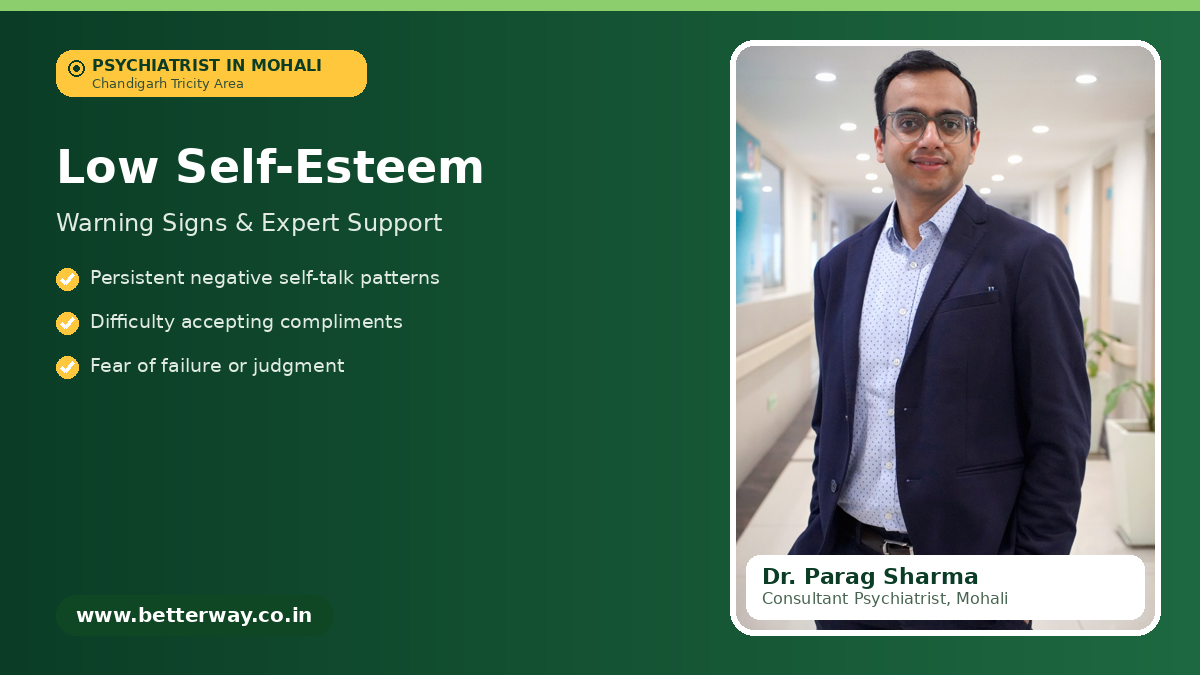
How you view yourself dictates how you interact with the entire world. When an individual suffers from low self-esteem, it acts as a distorted lens, coloring every achievement with doubt and every interaction with insecurity. As the final spoke in our Complete Guide to Mental Health cluster, this article explores the root causes of poor self-worth, the hidden warning signs, and how evidence-based psychiatric support can help you rebuild a resilient, positive self-image.
Understanding the Roots of Poor Self-Worth
Low self-esteem rarely develops overnight. It is typically the cumulative result of childhood experiences, environmental pressures, trauma, or chronic criticism.
The Centers for Disease Control and Prevention (CDC) points out that Adverse Childhood Experiences (ACEs)—such as neglect, bullying, or unstable family environments—profoundly impact how a developing brain forms its sense of self-worth. When negative core beliefs take root early in life, they often persist into adulthood, sabotaging careers and romantic relationships.
Key Warning Signs to Watch For
People with poor self-worth often develop complex coping mechanisms to hide their insecurities from the outside world. Recognizing the clinical signs is the first step toward healing.
Watch for these common behavioral indicators:
- Extreme Perfectionism: Believing that anything less than flawless is a total failure.
- Chronic People-Pleasing: Sacrificing your own boundaries and well-being to gain the approval of others.
- Hypersensitivity to Criticism: Interpreting even mild, constructive feedback as a devastating personal attack.
- Imposter Syndrome: A persistent, internalized fear of being exposed as a “fraud,” despite clear evidence of competence.
- Negative Self-Talk: A constant internal monologue that is harsh, unforgiving, and deeply critical.
The Psychiatric Link to Mood Disorders
In the medical community, a severe lack of self-worth is treated as a highly significant clinical symptom. The World Health Organization (WHO) recognizes that a diminished sense of self is a primary diagnostic criterion for several mental health conditions.
Similarly, extensive literature in the American Journal of Psychiatry consistently demonstrates that untreated low self-esteem is a massive vulnerability factor for the onset of Major Depressive Disorder, Social Anxiety, and eating disorders. Rebuilding your self-image through cognitive restructuring is not just a self-help exercise; it is a critical psychiatric defense against severe clinical illness.
Connecting the Dots in Your Wellness Journey
Improving your self-image goes hand-in-hand with regulating your overall emotional landscape. Be sure to review the other critical topics in our wellness cluster:
- Learn to handle daily pressures in Effective Stress Management Strategies.
- Understand the mechanics of your thoughts in Understanding Mental Health and Psychology.
- Discover healthy ways to process frustration in Anger Management Strategies.
Rebuild Your Confidence in Mohali
You do not have to live with a constant, critical voice in your head. Professional psychiatric therapy can help you identify irrational negative beliefs and replace them with self-compassion and reality-based confidence.
Start Believing in Yourself Again:
At Betterway Mental Health Clinic, we specialize in identifying and treating the root causes of chronic insecurity and mood disorders. Dr. Parag Sharma (MD Psychiatry) utilizes proven, evidence-based therapies to help you rebuild your self-worth from the ground up.
Book Your Consultation Today:
- Clinic: Betterway Mental Health Clinic, SCO 7, 8, Hale Clinic, Sector 78, Mohali, Chandigarh
- Phone/WhatsApp: +91 6350485705
- Website: www.betterway.co.in